|
Plank
Road Folk Music
Society
|
|
|
Annual
Log Cabin Party is
back!
Music,
snacks, and camaraderie
. . .
and,
oh
yeah, lots of
music!
|
|
|
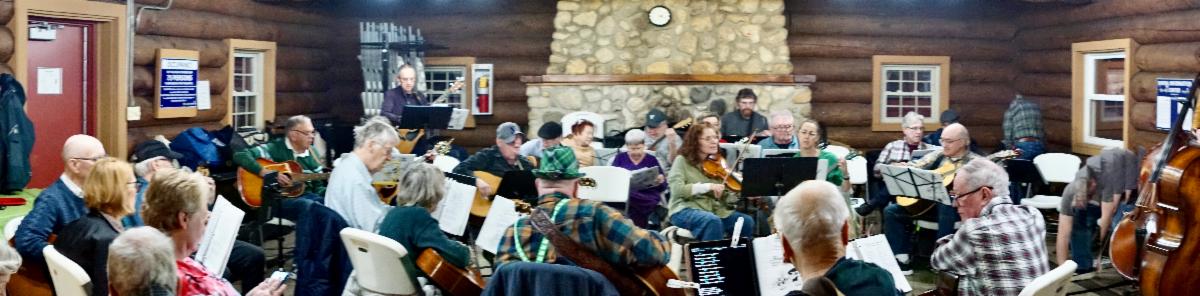
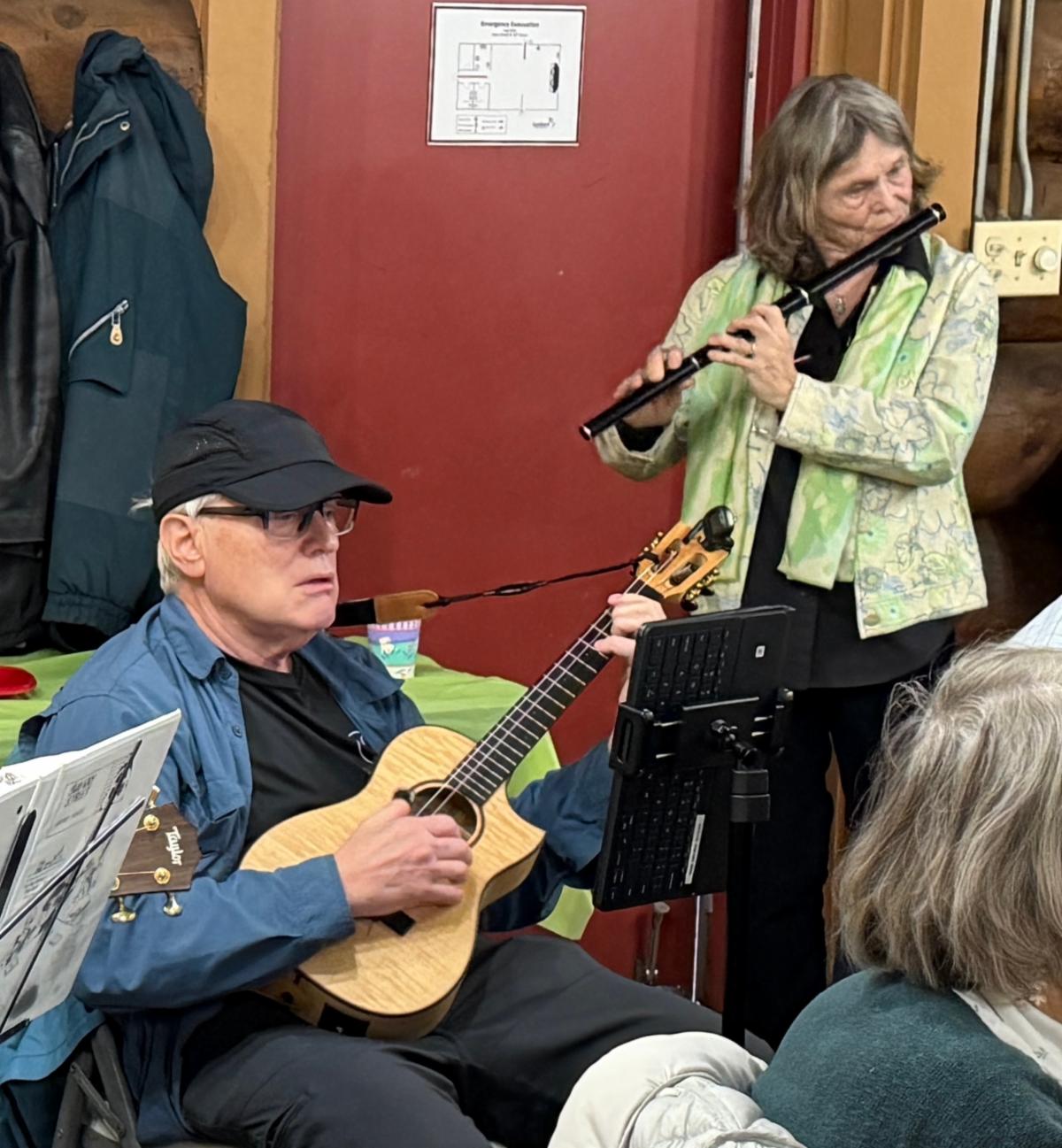
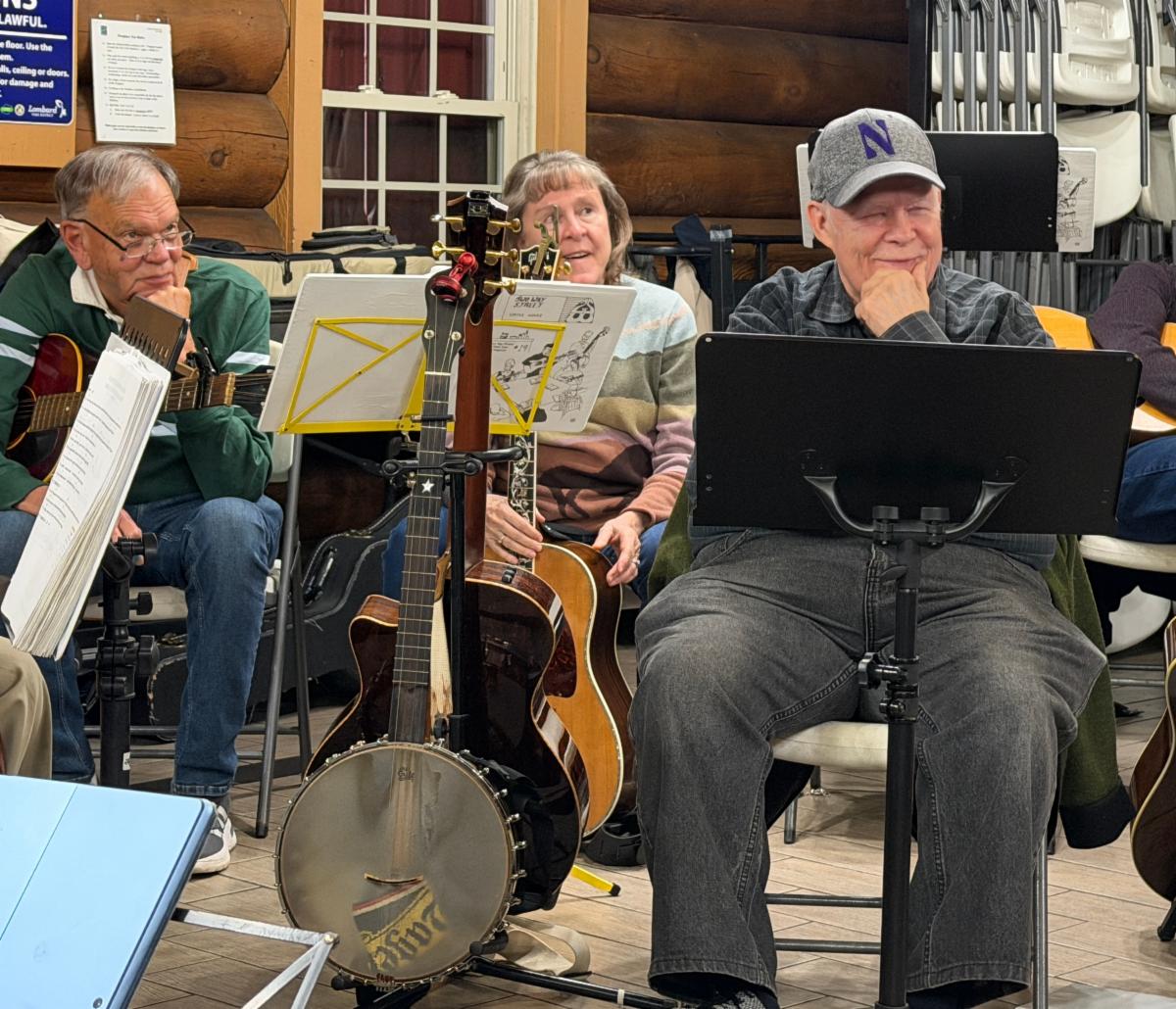
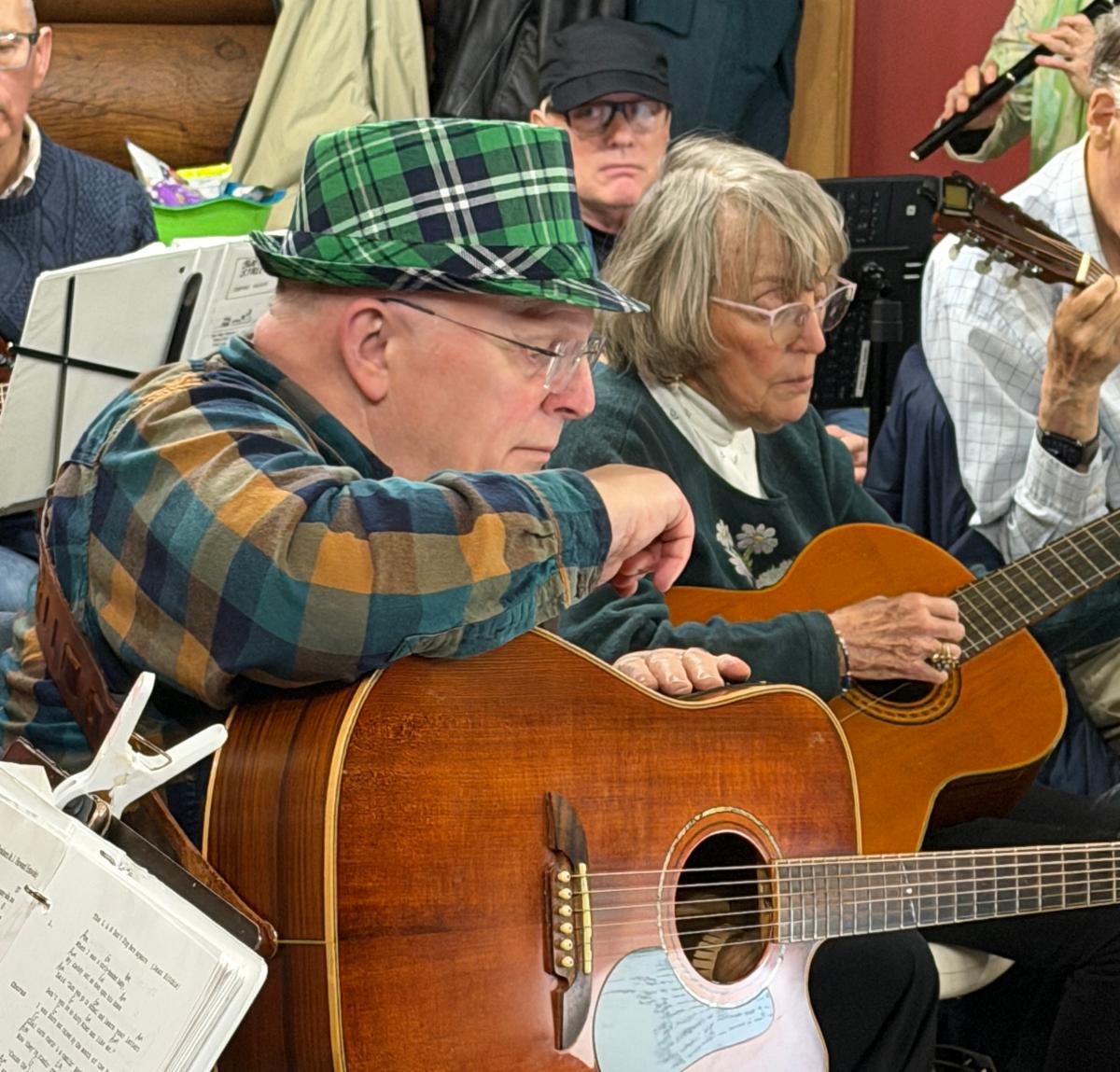
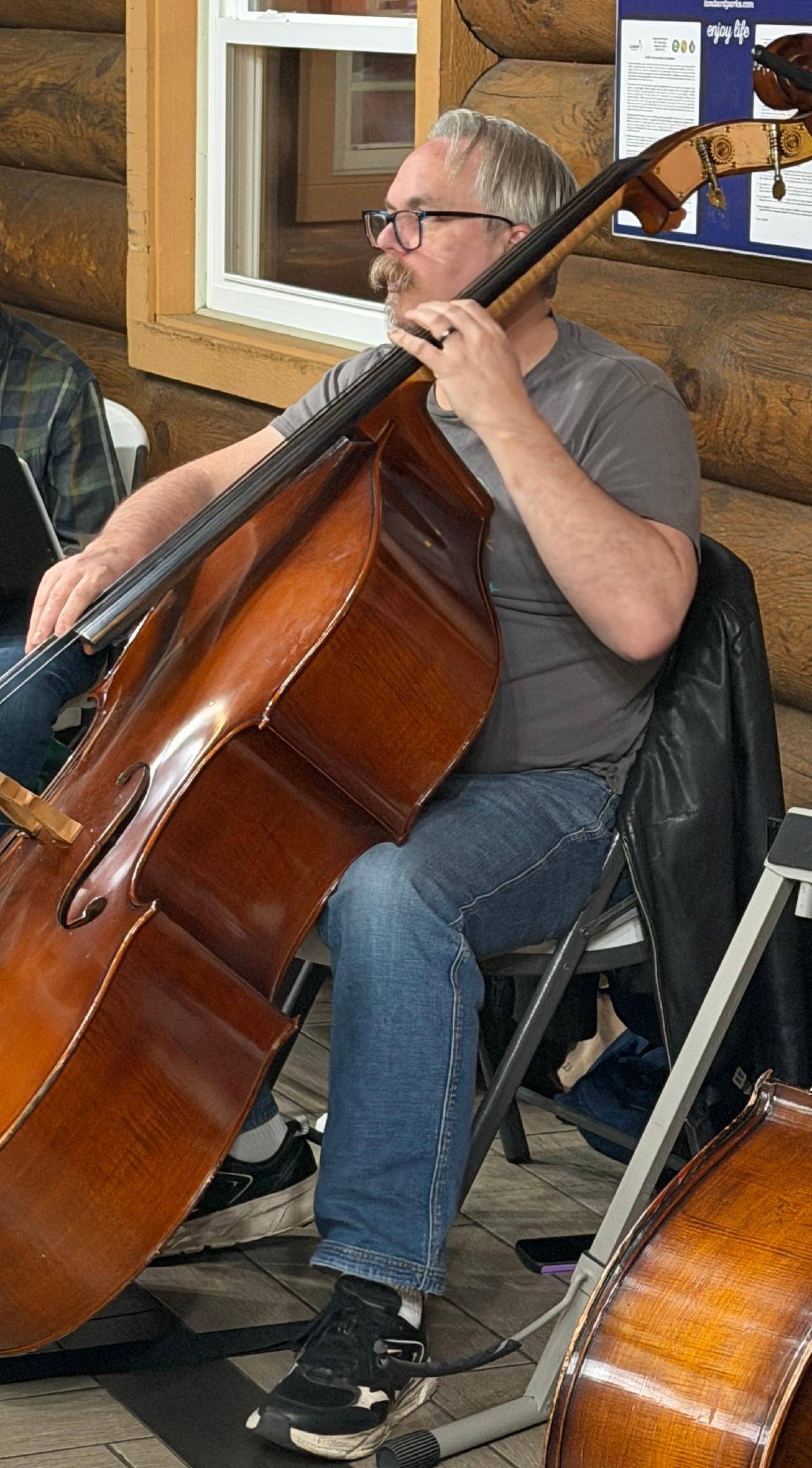
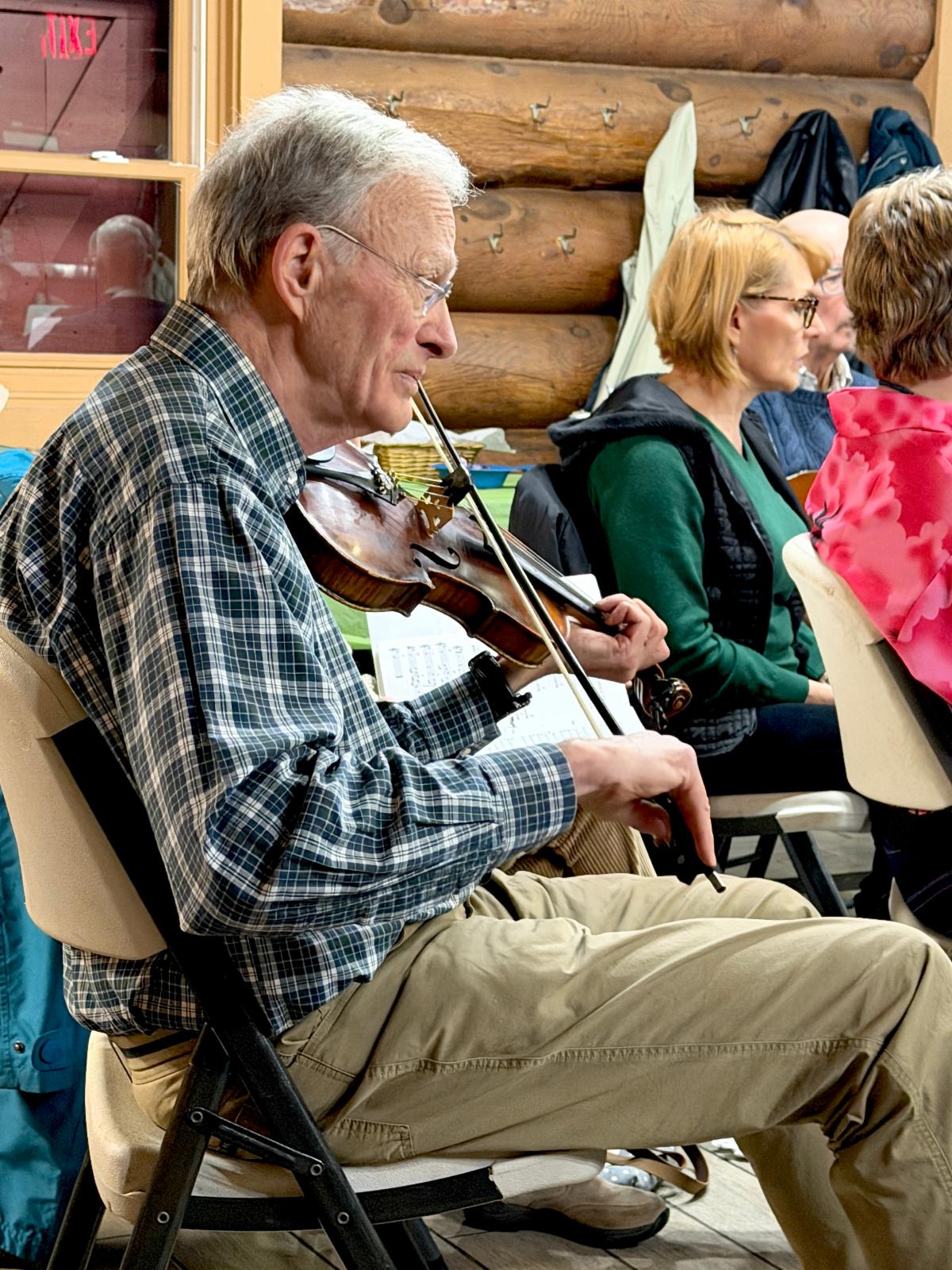
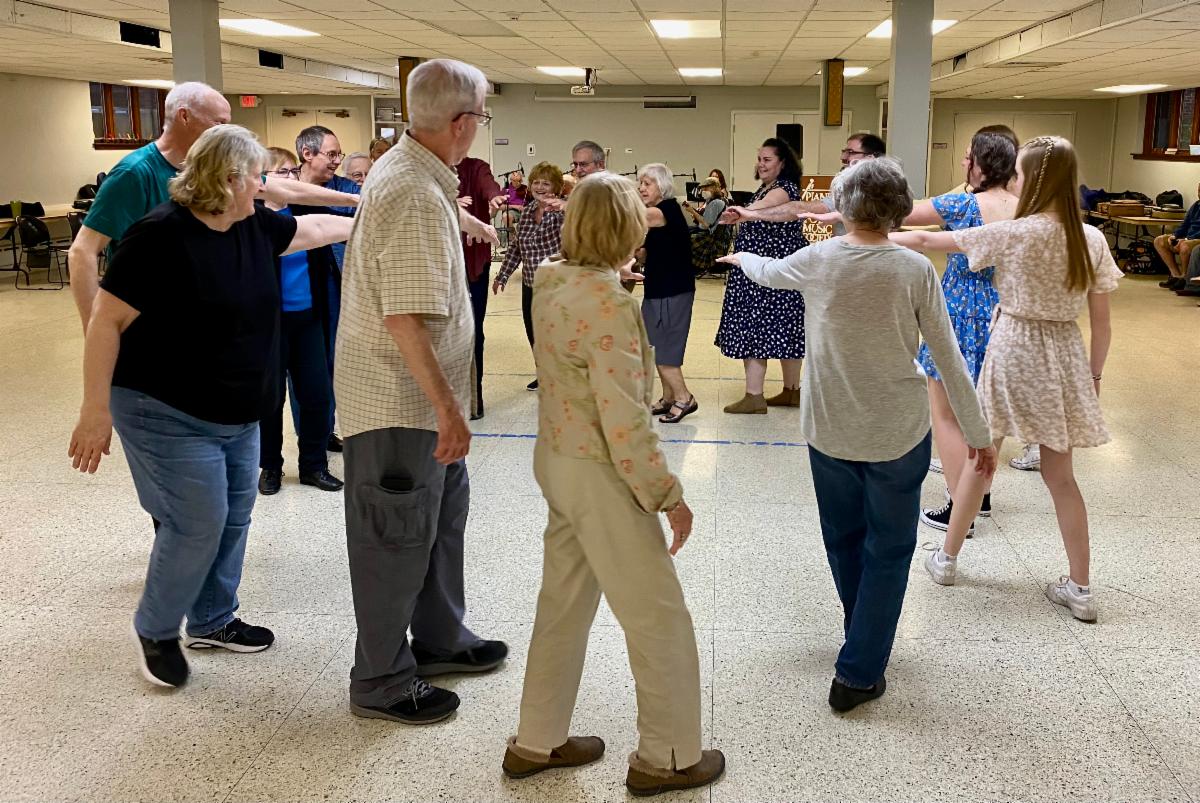
On
Sunday afternoon, March
15, Plank Road’s Log
Cabin party returned
after a one-year hiatus
due to our big 40th
Anniversary celebration
last summer. An
estimated 37 people
attended, including
members old and new. It
was a chance to make
music, socialize and
catch up with folks we
hadn’t seen for
awhile.
|
|
|
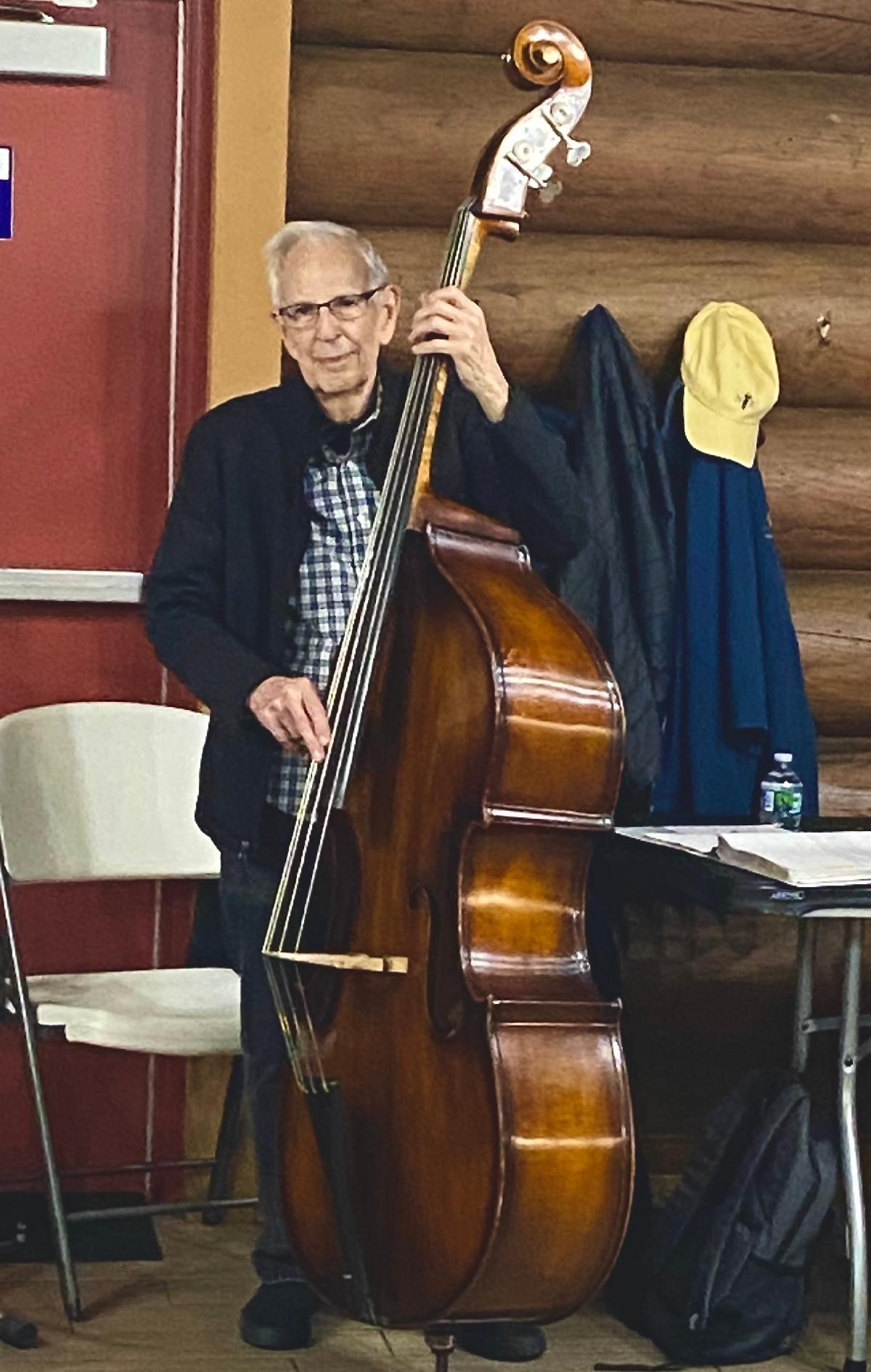
"Thanks
to everyone who made our
Cabin Party a success. I
believe everyone there
had a great time and it
was due to all of your
efforts (and also to
your respective
spouses). Also, it was
great to hear Dave back
on the bass!"
- George Mattson
|
|
|
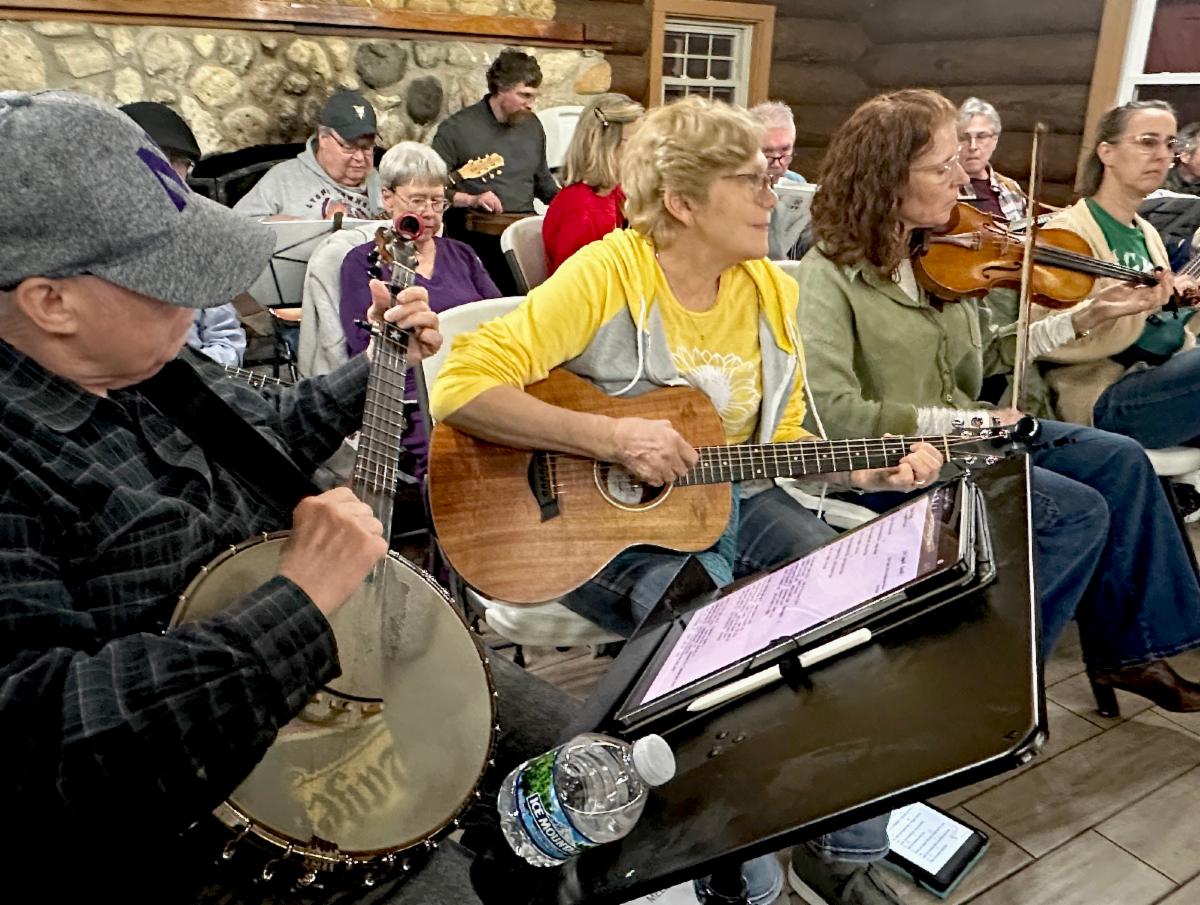
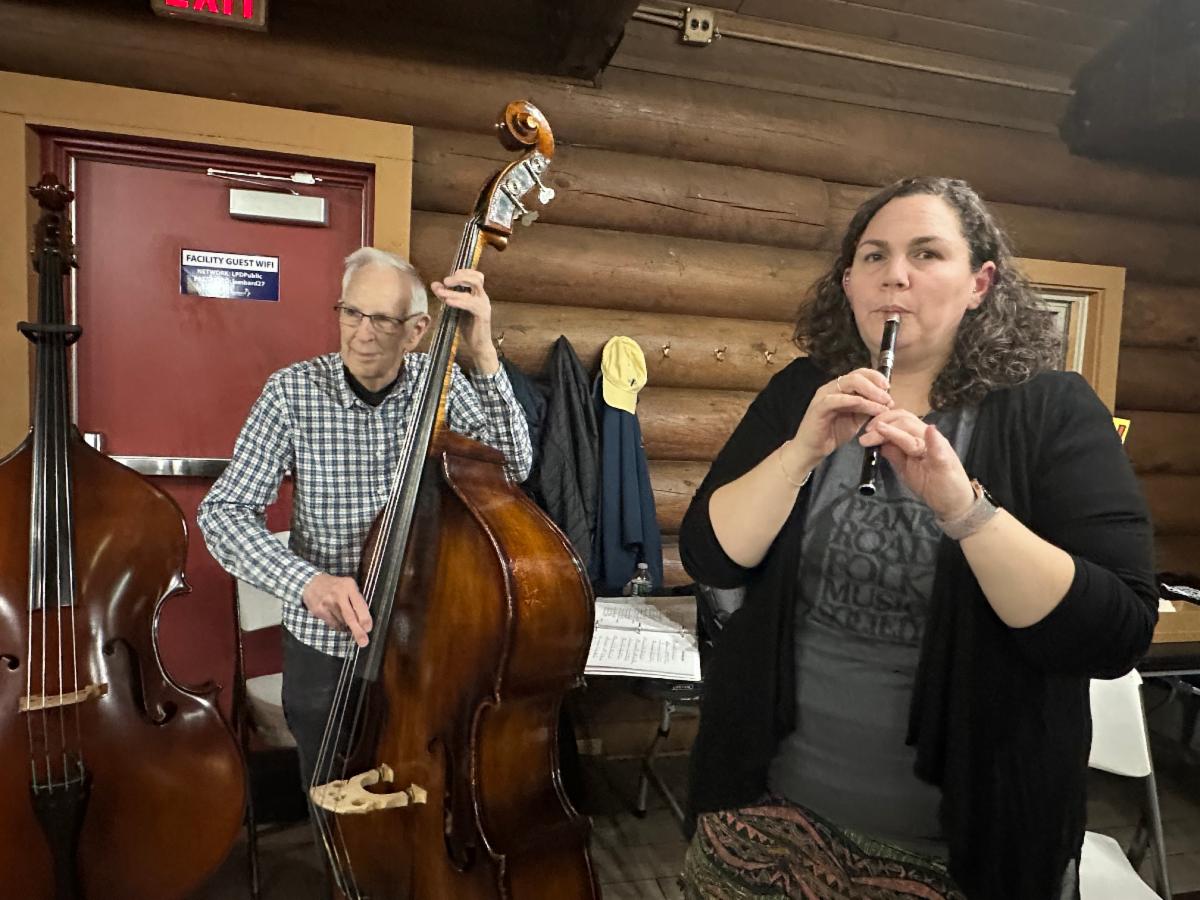
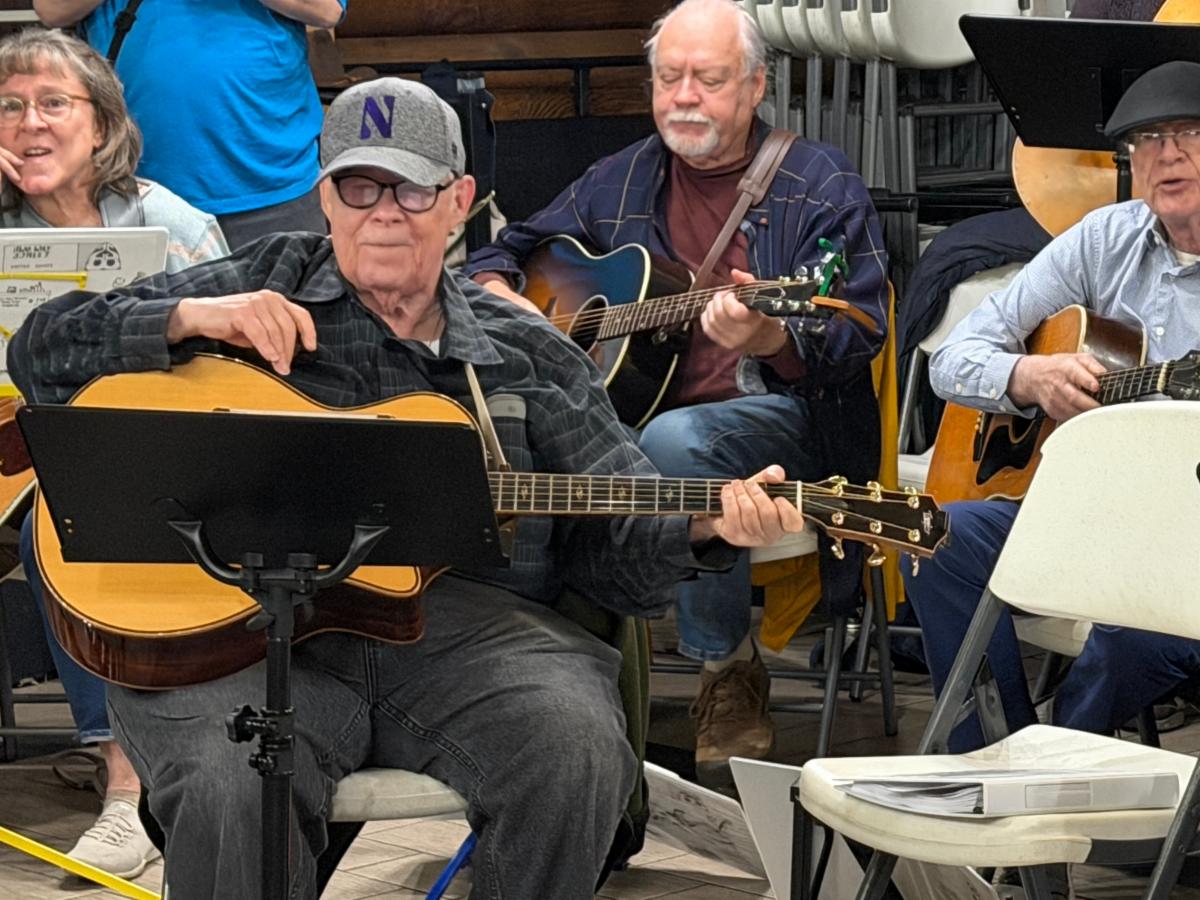
The
main attraction was the
music, with George
Mattson leading
us in song. A special
treat was listening to
the Plank Road string
band performing several
lively old-time tunes.
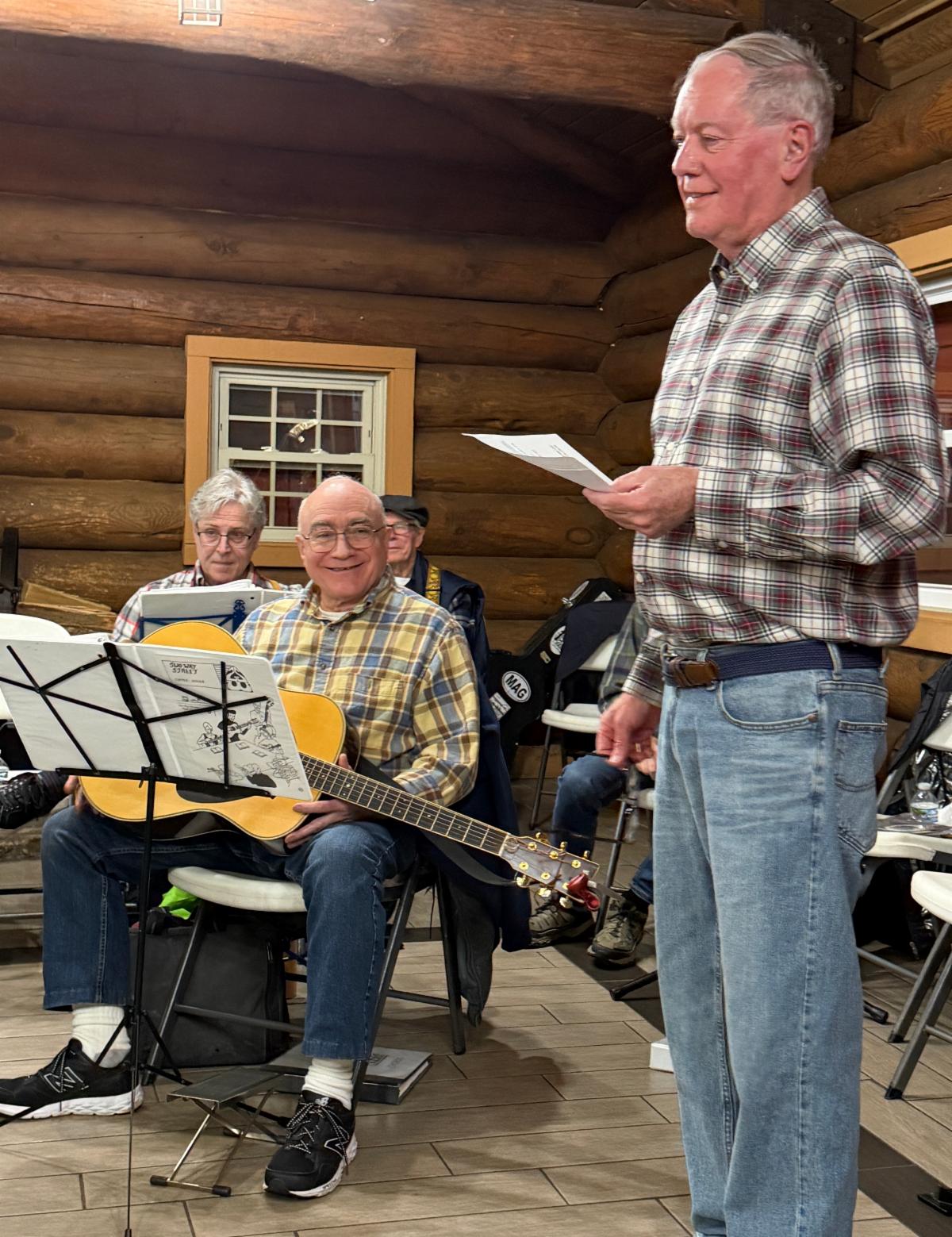
During
a break,
president Bob
O’Hanlon briefly
reviewed the status of
our finances,
memberships and our
schedule of events — and
was happy to report
Plank Road is in great
shape!
A
big thank you to
the Plank
Road board of
directors for
organizing the event,
setting up chairs,
tables and food items
before the meeting, and
for cleaning up
afterwards —
including Mimi
O’Hanlon and Jenneine
Gilroy.
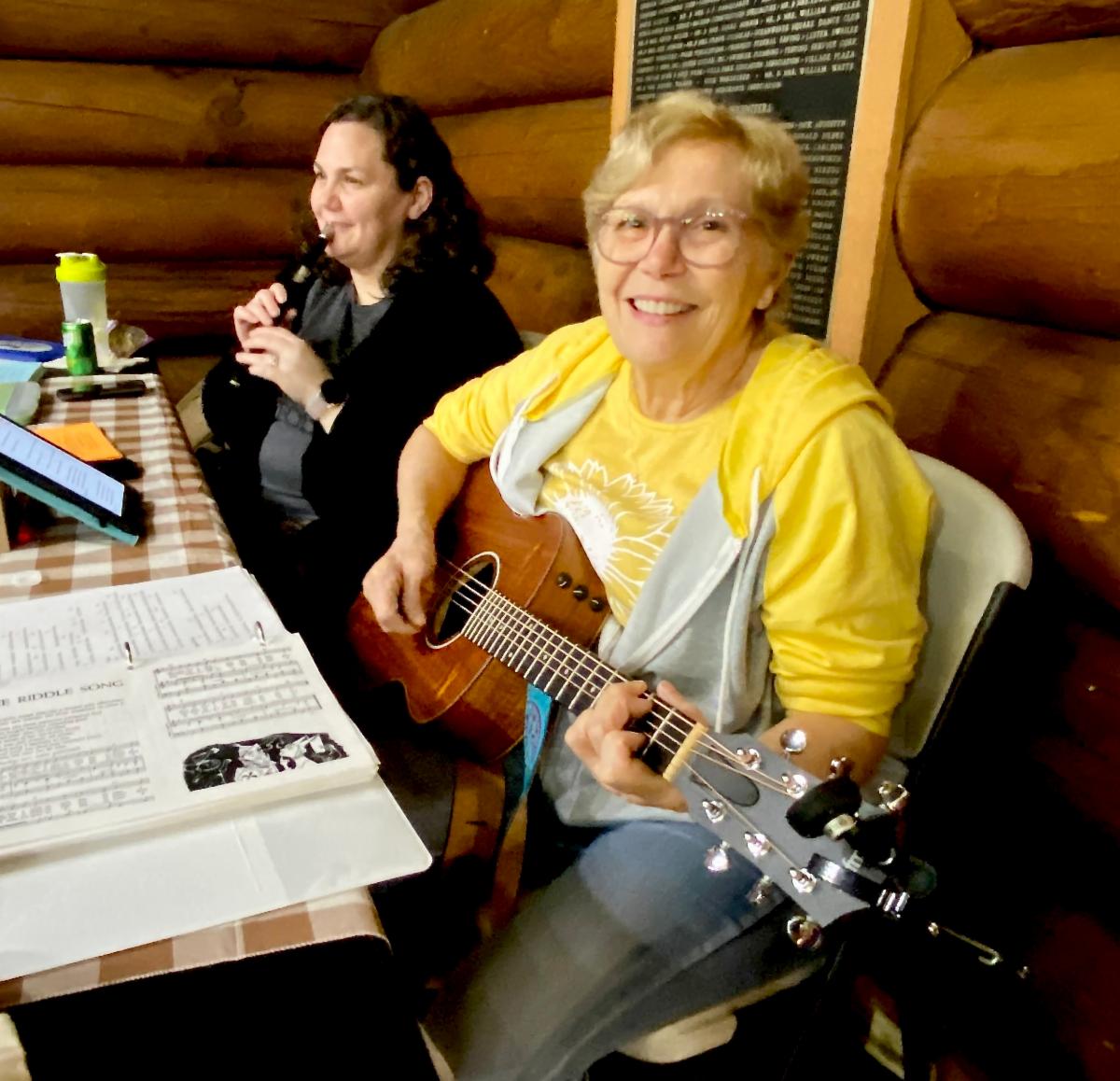
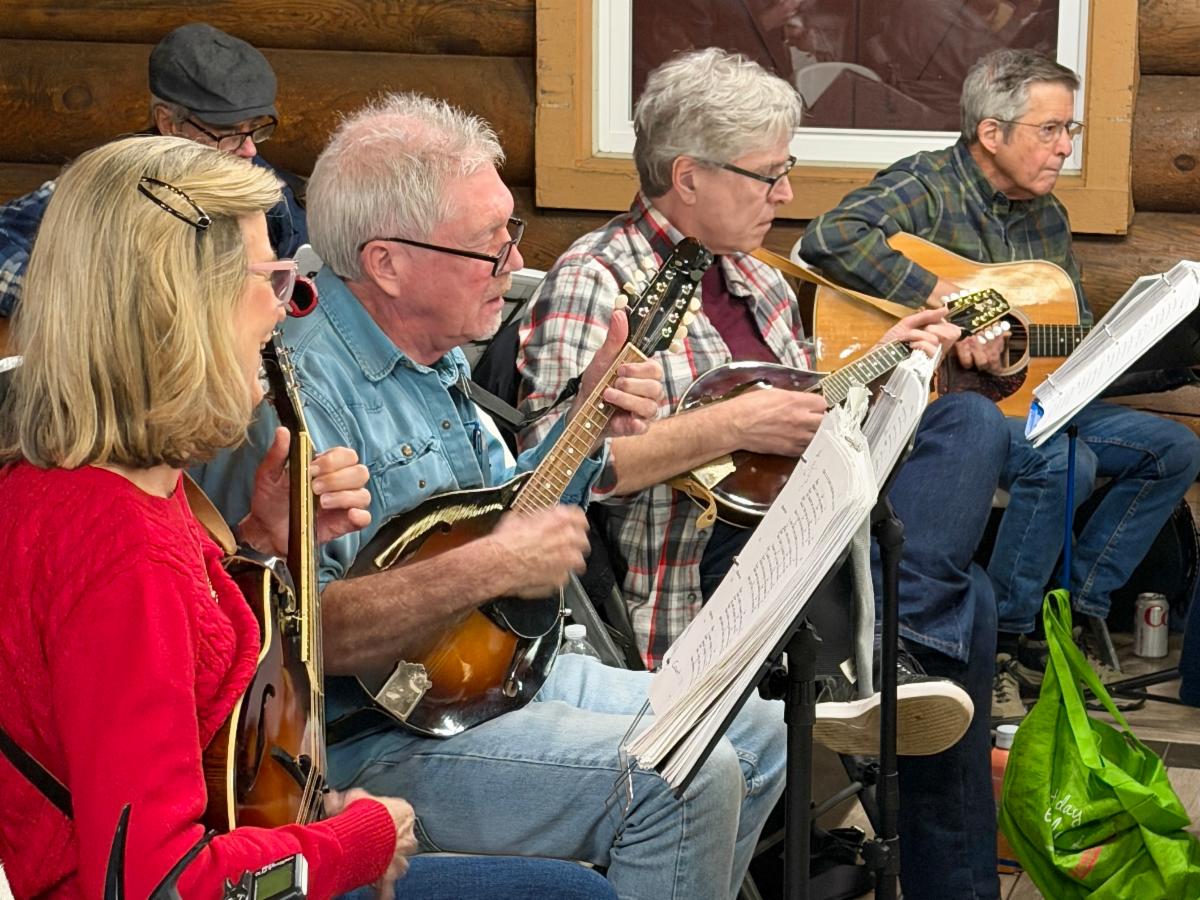
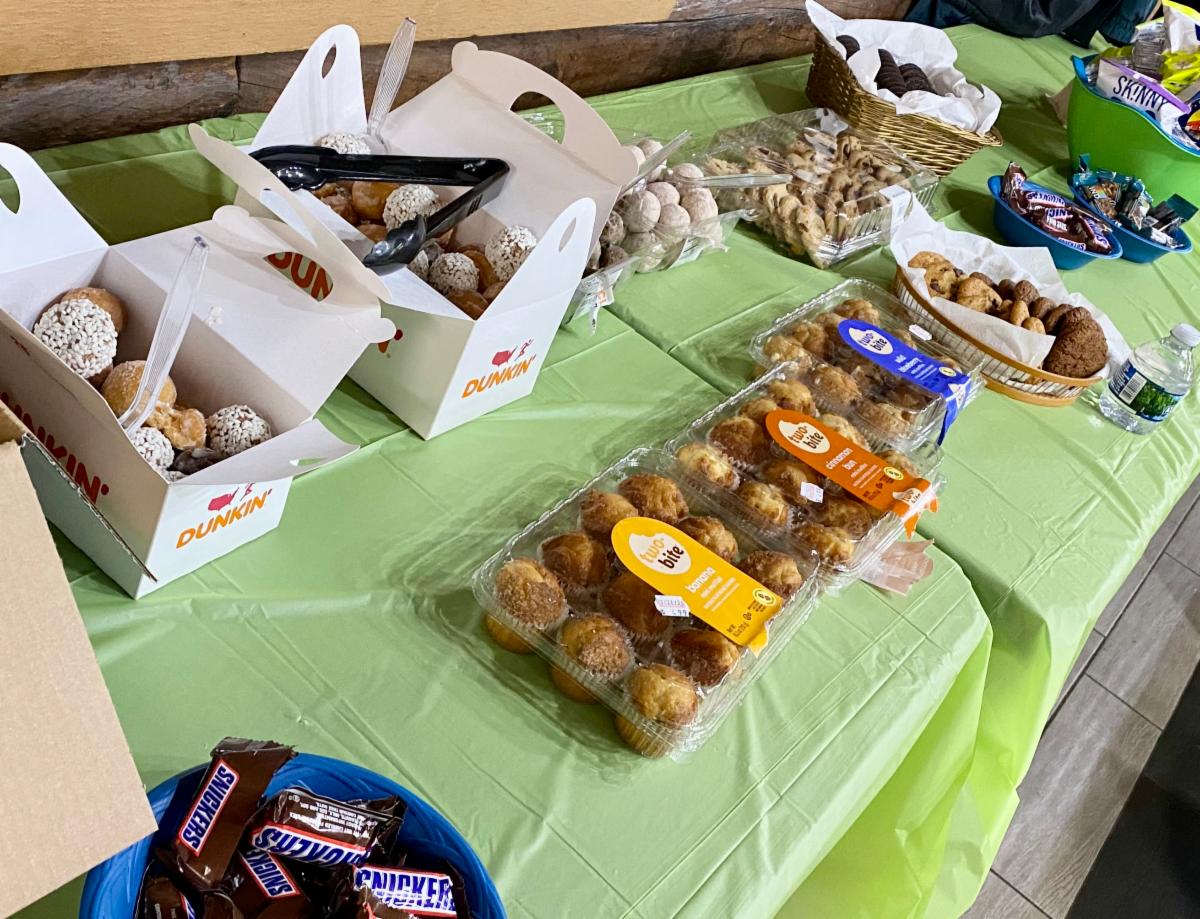
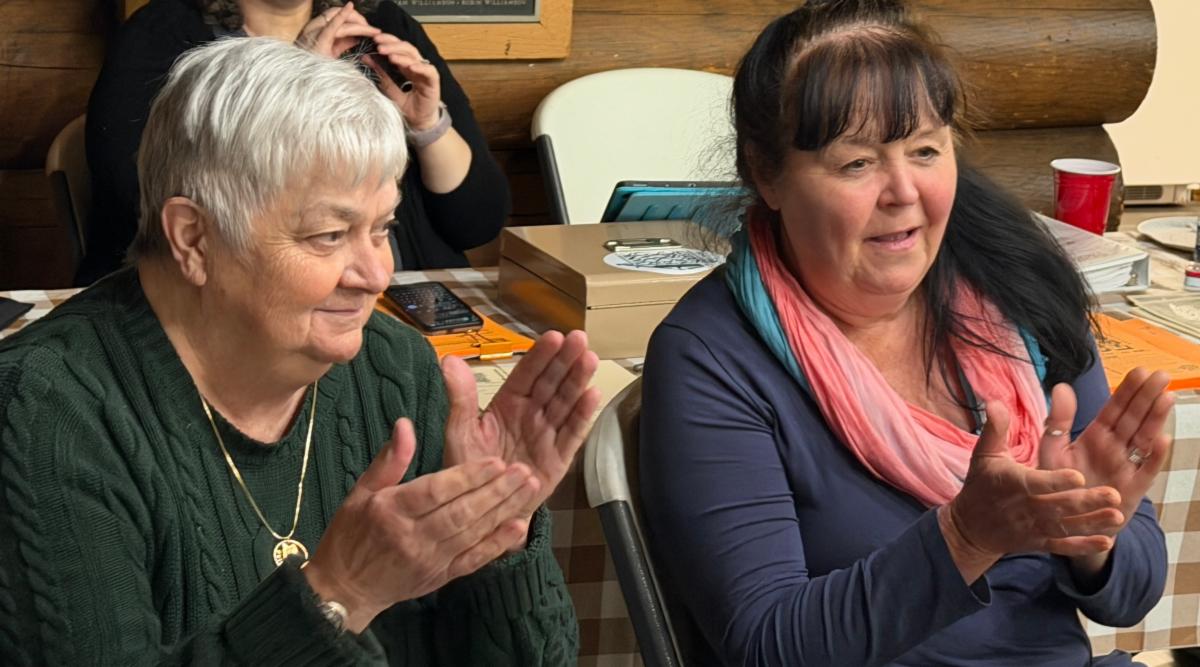
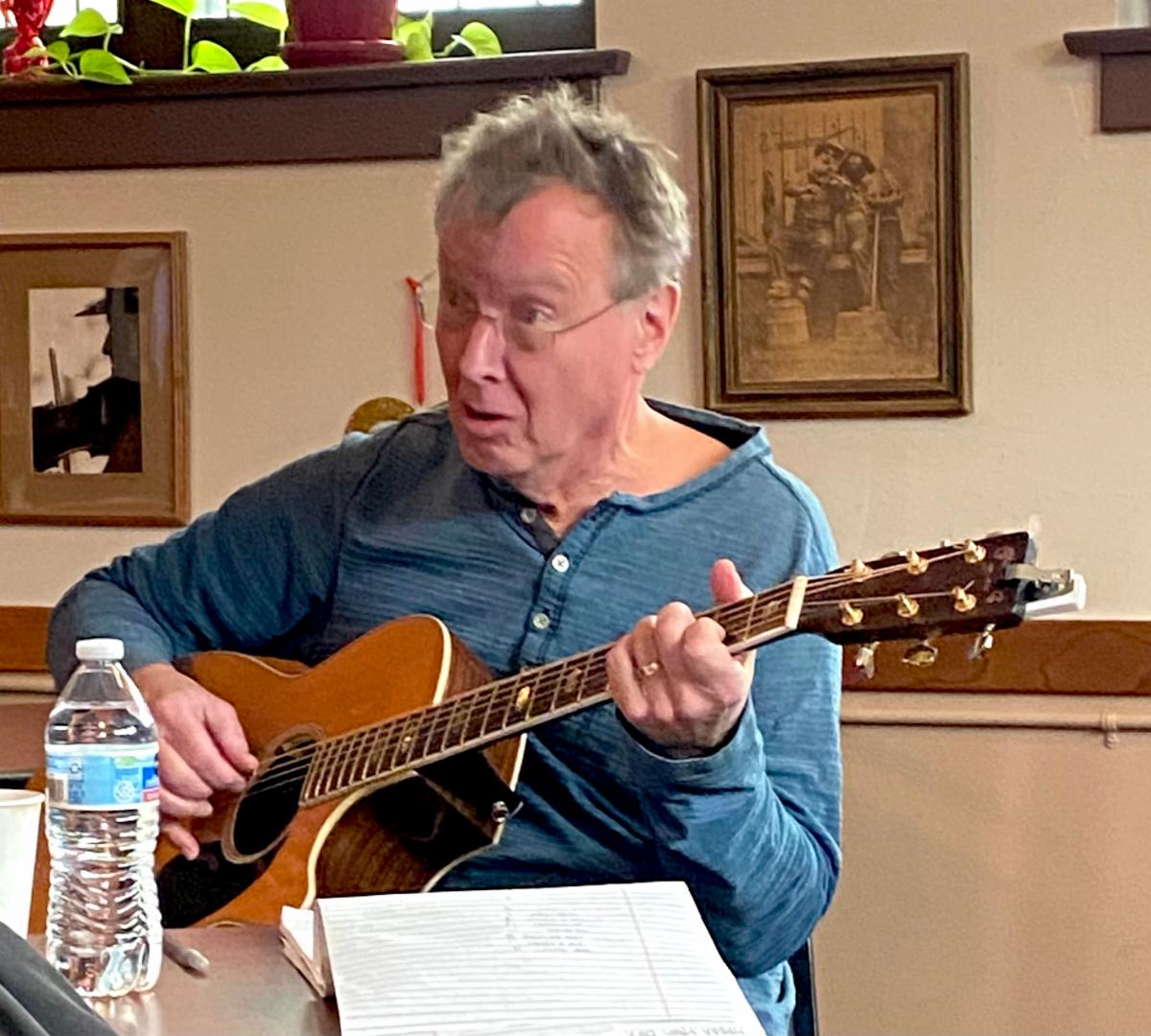
Here's
a selection of photos .
. .
|
|
|
Click
here
to watch the string band
in action!
|
|
PHOTO
& VIDEO
CREDITS:
Jen
Shilt, Christine Buik,
George Obregon, Bill
Lemos.
|
|
|
|
"Good
turnout, good music and
many good side
conversations. Thank you
George for your usual
great song leading. And
special thanks to Jim
and Jenneine, for the
extra work they put in
setting up and tearing
down.”
-
Bob
O’Hanlon
“It
was a fun afternoon for
sure. Another thank you
to Bob for coordinating
this year!”
-
Jen
Shilt
“Great
job George and everybody
else.”
-
Jim
Gilroy
“Agree!
It was great to see
everyone, including
several new faces.
Thanks to all. A little
rain never hurt anyone —
and we did
leave
before the snow!”
-
Bill
Lemos
|
|
|
Guitar
Workshop kicks off the
first 5th Saturday of
the year.
|
|
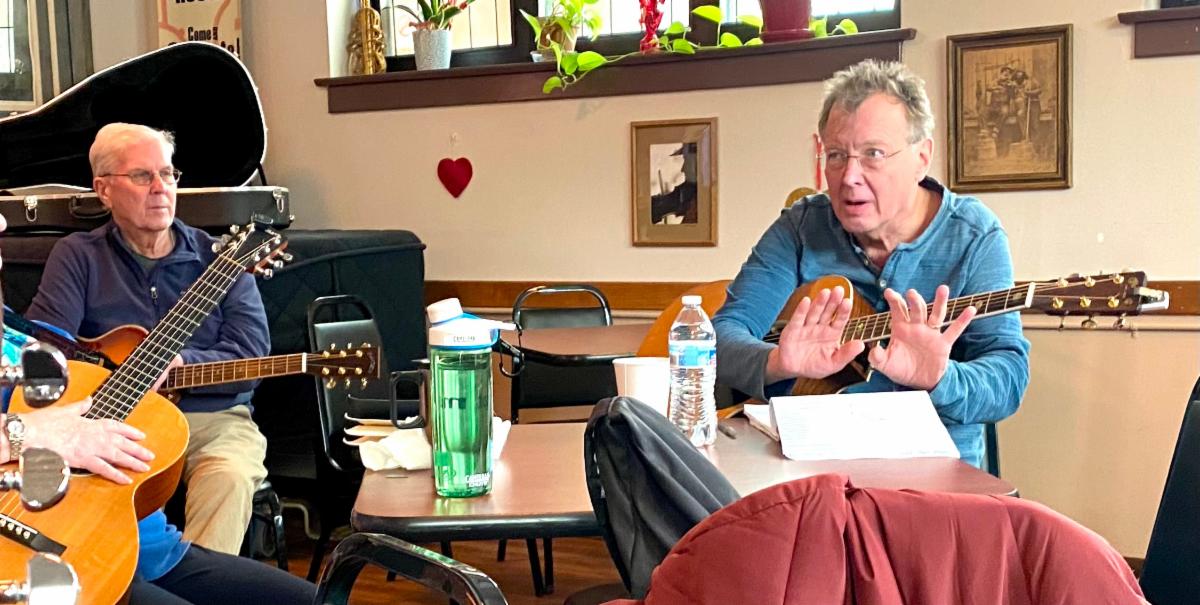
“Simple
techniques to spice up
your guitar playing . .
.”
That
was the theme of the
first 5th Saturday
Workshop of the new year
on January 31, hosted by
Two Way Street Coffee
House, in partnership
with Plank
Road.
The
workshop featured
award-winning
songwriter, musician,
producer and arranger
Jim Bizer. He shared
some simple techniques
and ideas to make guitar
playing more fun and
interesting.
“The
guitar is an amazing
instrument,” says Jim.
“It’s capable of so many
things."
|
|
He
discussed “texture,”
which refers to how
different layers of
sound, such as melodies
and harmonies, can be
heard simultaneously and
how they interact.
Through simple
techniques such as
“palming,” which is
resting the palm of your
hand on the strings to
achieve a muted sound.
You can also achieve a
“percussive” effect by
strumming and palming,
creating a “boom-chuck”
rhythm.
Other
common techniques like
bass runs "walking" up
and down, and different
versions of the same
chord — for example,
playing a standard A
chord on the 2nd fret,
and a barre A chord on
the 5th
fret.
It
all adds variety and fun
to your playing, so
you’re not “just
strumming along.”
|
|
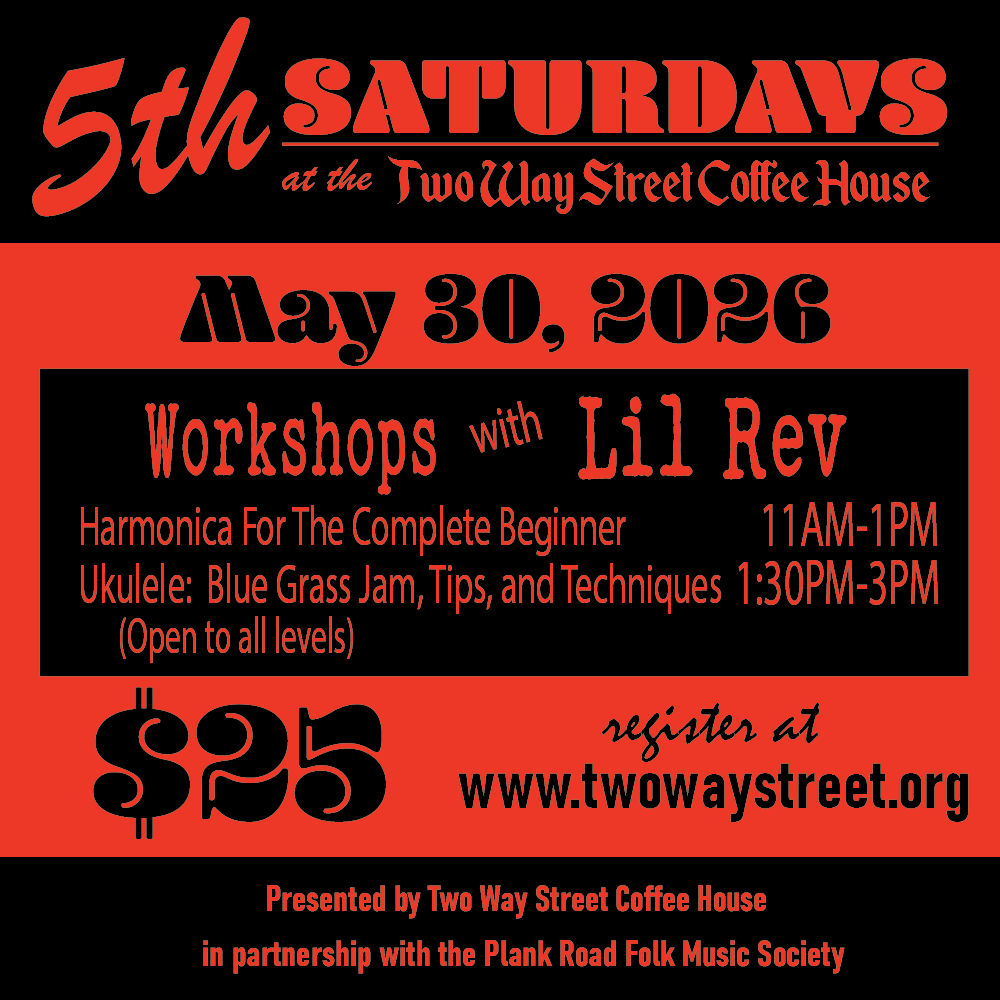
NEXT
5th SATURDAY
WORKSHOP
IS
MAY
30!
|
|
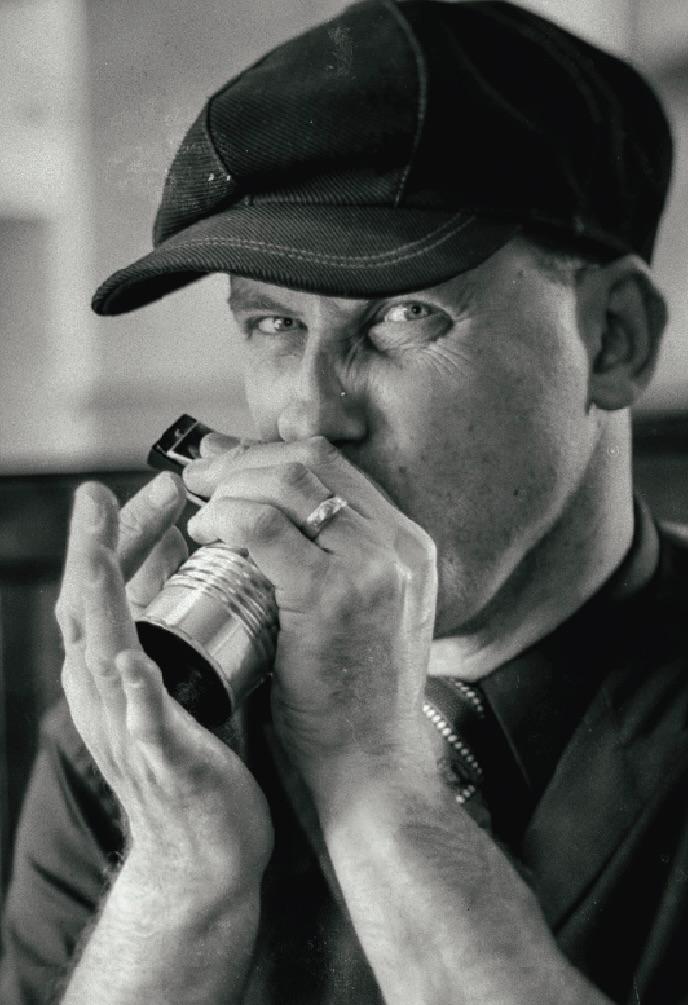
Lil
Rev will be doing 2
workshops — "Harmonica
for the Complete
Beginner" and "Ukelele
Tips & Techniques."
Watch
for further info and
reservation
details.
|
|

|
|
Two
Way Street Coffee
House
Heritage
Matinee Series
APRIL
12 - 3PM
Two
Way Street's Heritage
Matinee Series continues
with select Sunday
afternoon concerts.
There is no admission to
the concerts, but
free-will donations are
collected to help
support 2WS’s operation
and programming.
Join
us on April 12
with Mark
Dvorak, Ashley &
Simpson,
and local artists
Ren
Herr and
Joseph
Kostal. It's
a great way to spend a
Sunday afternoon — and a
great way to support Two
Way Street!
For
more information, visit
twowaystreet.org
|
|
Enjoy
a
fun-filled
evening of old-time
string band music and
dancing, as Meg Dedolph
calls squares, reels,
waltzes and more!
Co-sponsored by Plank
Road and Two Way Street
Coffee House. Click
here for more
details!
Saturday,
April 25
7-9
PM, Doors open at
6:30
And
mark your calendar for
our last barn dance of
the year: Saturday,
May 9
|
|
Dedicated
to those of us who have
crossed into their
eighth decade.
Or
will soon.
|
|
|
Two
Way
Street
Coffee
House —
Friday
Night
Concert
Series.
Doors
open at
7:30pm
and
concerts
start at
8pm. You
can also
view
concerts
online —
more
information
on Two
Way
Street
Coffee
House or
Facebook.
Maple
Street
Concerts.
Enjoy
live
concerts
at Maple
Street
Chapel
in
downtown
Lombard.
Please
check
the Maple
Street website for
concert
listings.
Other
venues .
.
.
-
Acoustic
Renaissance
Concerts
-
Old Town
School
Of Folk
Music
-
Tobias
Music
Concerts
|
|
Wesley’s
Place
Plank
Road
member Diane
Callahan
Mastny alerted
us to
another
folk
music
venue in
the
area,
Wesley’s
Place in
LaGrange.
They
feature
live
music on
Friday
nights —
acoustic
bluegrass,
country,
folk,
gospel,
jazz,
singer-songwriter
and
western
music.
Diane mentioned
she’s a
long-time
member
of Plank
Road,
and for
her,
“the
‘QuarterNotes’
newsletter’s
name
harkens
back to
the Old
Quarter
Coffeehouse
in
Brookfield,
back in
the
1980s.”
Wesley's
Place is
in the
First
Methodist
Church,
100 West
Cossitt
Ave. in
La
Grange. Doors
open at
6:30 on
Friday
evenings. Music
begins
at
7.
For
additional
information,
check
their
website,
https://www.wesleysplacemusic.com/
(Yes,
Wesley’s
Place
concerts
are the
same
night as
Two Way
Street
Coffee
House,
but we
like to
let
folks
know
about
all the
local
venues!)
Thanks
Diane!
NOTE: If
readers
know of
other
venues,
please
let us
know.
For
example,
there’s
Friendly
Music
Community
in
Berwyn,
which
several
Plank
Road
folks
have
visited —
we’ll
review
them
next
issue!
|
|
|
|
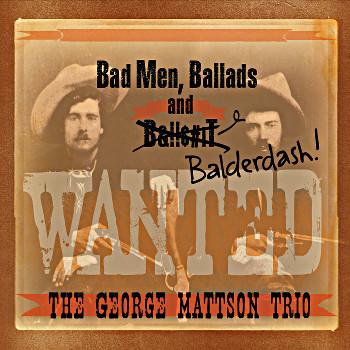
George
Mattson
Trio
gmtrio.com
|
|
|
|
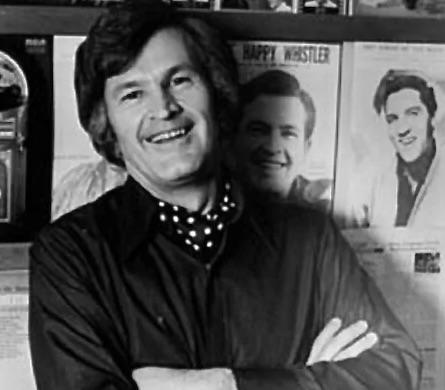
Don
Robertson – songwriter
extraordinaire!
By Andy
Malkewicz
|
|
|
Don
Robertson, was a country
and pop songwriter and
pianist, and also a
one-hit wonder pop
star. He was
born in Beijing China on
Dec. 5, 1922, and passed
away in California on
March 16, 2015 at the
age of
92.
His
father, a noted
physician and medical
scientist (developer of
the first Blood Bank),
and was the head of the
Department of Medicine
at Peking Union Medical
College. His mother was
a talented pianist, and
a poet/playwright. She
noticed Don's interest
in the piano, and
started him on lessons
at the age of four. He
began composing simple
songs around age seven.
When they moved to
Chicago, Don was
fascinated by music from
cowboy, to symphonic
(his father had a large
record library), to the
church choir hymns he
sang on Chicago’s South
Side.
He
was renowned for many
classic songs:
- Please
Help Me I’m
Falling –
1959 Hank Locklin
- I
Don’t Hurt
Anymore –
1954 Hank Snow, 1954
Dinah Washington
-
I Really Don’t Want To
Know –
1954 Eddy Arnold, 1960
Tommy Edwards
- Born
to be With
You –
1956 Chordettes, 1960
Bonnie Guitar & Don,
1968 Sonny James, and
many
more
- Not
One Minute
More –
1959 Della Reese
- The
Happy
Whistler –
1956 Don
Robertson
- Hummingbird –
1955 – Les Paul &
Mary Ford, and also
Frankie Laine
- I
Love You More and More
Every day –
1964 Al Martino
- Ringo –
1967 Lorne Green
-
and over 10 Elvis
Presley covers
He
was inducted into the
Nashville Songwriters
Hall of Fame in 1972.
His songs were simple,
graceful, and heartfelt.
In the early 1950s he
was instrumental in
bringing sophistication
to country music with
the many smoother songs
and singers he worked
with, continuing the
cross-over of country
song of famous writers
and singers before him
(Hank Williams, the
Carter family,
etc).
Robertson
meets Carl Sandburg . .
.
In
the early 1930s, the
Robertson family began
spending summer
vacations at Birchwood
Beach in Harbert,
Michigan, near the home
(and farm) of the Carl
Sandburg family, on the
dunes overlooking Lake
Michigan. The families
became friends. Don and
Carl Sandburg’s middle
daughter, Helga,
sometimes went horseback
riding
together.
At
the time, the three-time
Pulitzer prize-winning
poet and author was
working on a collection
of folk songs, which
later was published in a
book called “The
American Song
Bag.” A noted
singer and guitarist,
Sandburg was possibly
the first American
|
|
|
urban
folk singer,
accompanying himself on
solo guitar at lectures
and poetry recitals, and
on recordings.
Carl
would often sing and
play guitar in his home
for friends and
relations, and took time
out to show young Don a
few chords on the
guitar. Carl was a big
influence on Don's
future career as a
songwriter, singer and
pianist. During high
school and college he
played piano in local
dance orchestras and was
earning regular money at
it by the age of
14.
From
backup musician to
songwriter . . .
In
the coming years, Don
had many musical jobs,
backing up groups on
piano, was signed to a
publishing company in
1945, and was musical
arranger for WGN. His
career as a professional
songwriter began in
1953, when he began
collaborating with Hal
Blair. Don’s first big
songwriting success was
with his
co-written I
Really Don’t Want to
Know, which
became a number one
country hit for Eddy
Arnold in 1954, as well
as a simultaneous pop
success for Les Paul
& Mary Ford. The
near-perfect country
song, it has since been
recorded by more than
200 artists worldwide
and been a hit several
times over, most notably
by Tommy Edwards (1960),
Solomon Burke (1962),
Esther Phillips (1963),
Ronnie Dove (1966) and
Elvis Presley
(1971).
Following
the success
of I
Really Don’t Want To
Know,
Don visited Nashville
and in a writing session
with Virginia-born Jack
Rollins,
co-wrote I
Don’t Hurt
Anymore.
Recorded by Hank Snow,
the song topped the
country charts for 20
weeks in the summer of
1954 and Dinah
Washington’s cover
version made number
three on the R & B
charts that same year.
Snow became a good
friend to the songwriter
and over the years
recorded more of his
songs including the
hits Ninety
Miles an Hour (Down a
Dead End
Street) (1963), I
Stepped Over the
Line (1964)
and The
Queen of Draw Poker
Town (1965)
plus several albums
tracks.
From
Faron Young to Elvis to
John Prine...
Other
notable
Don Robertson
country songs of the
1950s
include Go
Back You
Fool (Faron
Young,
1955), Condemned
Without
Trial (Eddy
Arnold,
1953), You’re
Free to
Go (Carl
Smith, 1955)
and I’m
Counting on
You (Kitty
Wells, 1957). The latter
song was the first of
Don’s to be recorded by
Elvis Presley in early
1956 for his first RCA
album. Over the years
Presley was to record 14
of Don’s songs, six of
which were featured in
the singer’s
movies.
In
1984 he also arranged,
performed and recorded
sound tracks for two
short films, in one of
which he appears as a
piano bar entertainer.
As a session musician he
played on numerous
recordings for such
diverse performers as
Johnny Cash, Nat 'King'
Cole, Duane Eddy, Chet
Atkins, Waylon Jennings,
Jessi Colter, Bonnie
Guitar, Charley Pride,
Al Martino, Kay Starr,
Jack Clement, John
Prine, Ann Margaret and
Sheb Wooley.
One
last note: On
Don's demo
of Please
Help Me I'm
Falling,
he started a style of
piano play called
"slip-note." Floyd
Cramer copied this
style, and had such hits
as "Last Date", San
Antonio Rose", and
others!
|
|
|
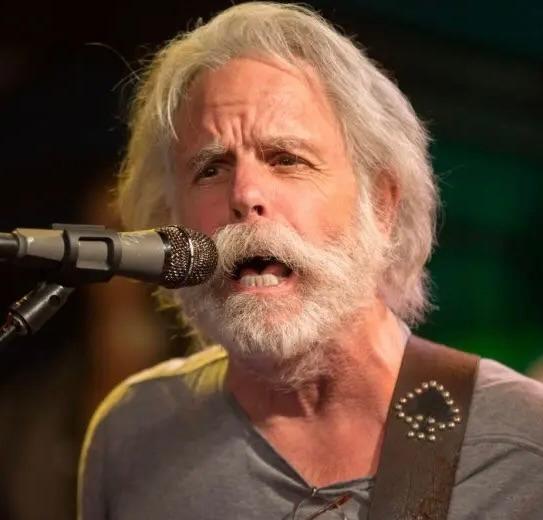
Bob
Weir
Guitarist,
songwriter and founding
member of the Grateful
Dead, Bob Weir, died
January 10. He was
78.
The
band, was founded in the
San Francisco Bay Area
in 1965. They pioneered
psychedelic rock, later
blending rock, folk,
blues, country,
bluegrass and jazz — and
they did it with mellow
ease and a gift for
improvisation that
became its trademark.
The Grateful Dead
created a niche for
meandering, exploratory
performances, each of
which seemed to have its
own personality.
Bob
Weir rose from folk and
jug band origins,
helping shape the Dead’s
sound into what many
called the “most
American” band — selling
millions of records and
inspiring a small nation
of loyal “Dead
Heads.”
Even
after the hippie culture
faded, the band retained
a gigantic fan base,
called Deadheads, a term
worn with pride. They
followed the group
wherever it played,
traded recordings of its
concerts and set up
mini-encampments,
complete with craft
bazaars, oceans of
tie-dye and no small
amount of drugs.
Weir,
like Jerry Garcia, had
an early fascination
with folk music. But
Weir also developed a
reputation for inventive
timing on the rhythm
guitar, his chords
alternately grounding
and contending with the
melodic chaos of the
other members of the
band. Although Garcia
and Robert Hunter,
the group’s lyricist,
were the Dead’s primary
composers, Weir wrote
key songs like “Playing
in the Band” and “Sugar
Magnolia.”
He
also sang lead on many
songs, including
“Truckin’,” a 1970
single that became a
signature hit, embodying
the band’s achievements
as road warriors and as
witnesses (and
survivors) of 1960s acid
culture. “What a long,
strange trip it’s been .
. .” And so
it was.
“I’m
hoping that people of
varying persuasions will
find something they can
agree on in the music
that I’ve offered,” he
said, “and find each
other through
it.”
|
|
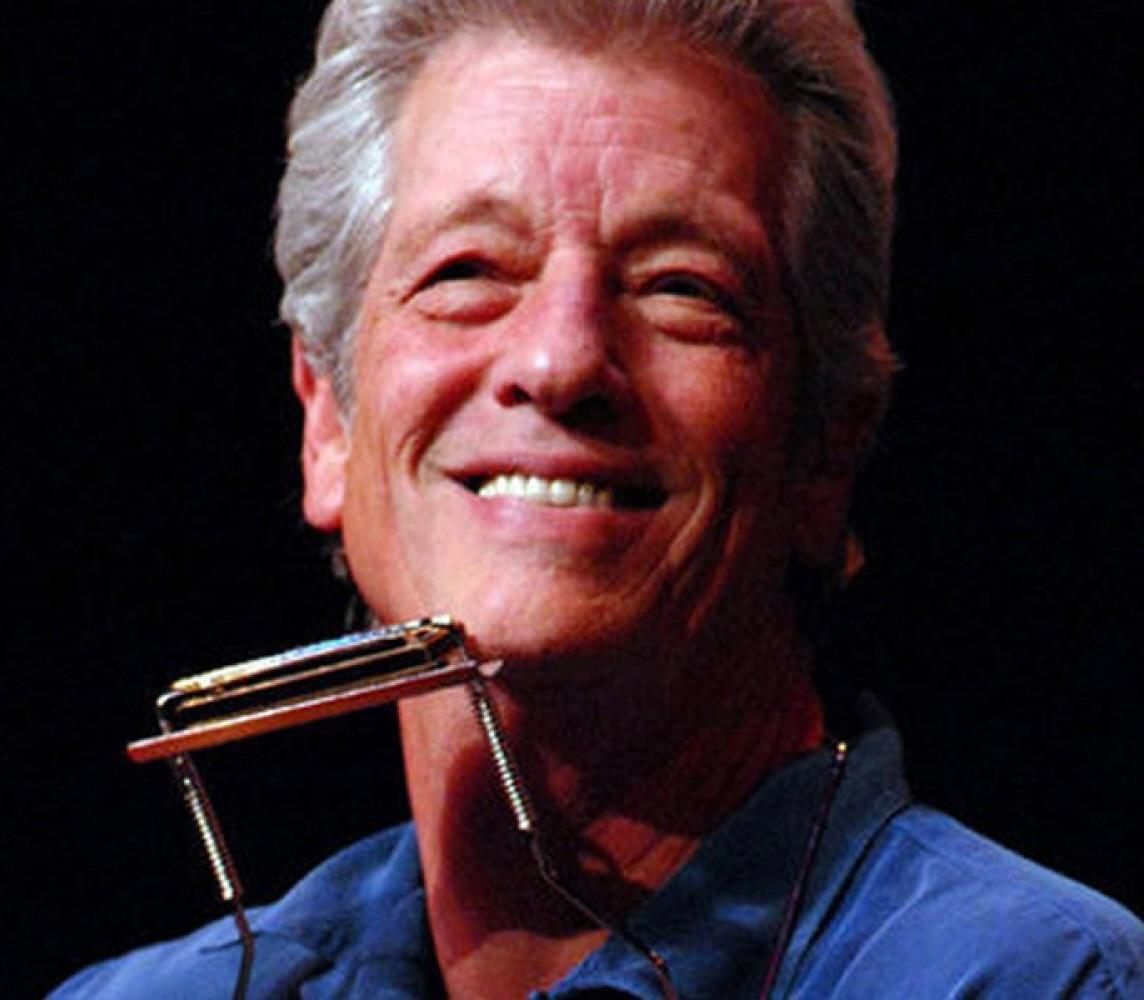
John
Hammond
Blues
guitarist and singer,
John Hammond, who was
one of the first white
American interpreters of
traditional blues, died
February 28 at age
83.
Hammond
came to the blues
through the folk boom of
the late 1950s and early
1960s, which he
experienced firsthand in
New York’s Greenwich
Village. He gained a
following there by
playing classic blues
songs in clubs and
coffee shops. In 1963,
at age 20, he began a
60-year recording career
that would include
collaborations with some
of the most important
and acclaimed artists of
all time.
By
high school he was a
fanatic, consuming any
blues recording he could
get his hands on and
seeing Jimmy Reed — who
became his idol —
performing at the Apollo
Theater. At 18, he got a
guitar of his own and
“drove all my friends
nuts for about a
year-and-a-half.”
Hammond
attended college but
quit after a year to
become a blues musician
— it was 1962, and the
American folk music
revival was reaching its
peak. He hitchhiked to
California, where he
busked on the L.A.
streets before finding
work in clubs. He then
made his way back east,
amassing enough
experience to get a gig
at the Newport Folk
Festival, followed
shortly by his first
album for Vanguard
Records.
Hammond
settled into Greenwich
Village, where he was
able to hobnob with
musicians like Bob
Dylan, Mississippi John
Hurt, Jimi Hendrix and
Eric Clapton. He was
instrumental in Dylan’s
connections with The
Band. Hammond’s third
album,
1965’s So
Many Roads,
featured three of the
musicians who would soon
become known as The
Band. He recommended
them to Dylan — and the
rest is
history.
Hammond
continued recording and
touring with peers until
1976, when he decided to
go solo. It was his solo
guitar (mostly acoustic)
and vocals that remained
his primary orientation
for the remainder of his
career. He won a Grammy
for his 1984
album, Blues
Explosion,
and was inducted into
the Blues Hall of Fame
in 2011.
|
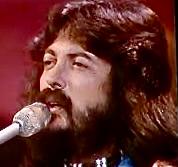
|
Chuck
Negron
Founding
member of Three Dog
Night, Chuck Negron,
died February 2 at age
83. In the early 1970s,
the band was selling
more records and concert
tickets than any other
artists in America,
scoring 21 consecutive
US Top 40 hits,
including three
No.1s.
Born
in New York, Negron sang
in doo-wop groups, and
also displayed talent as
a basketball player,
eventually winning an
athletic scholarship and
a move to California. He
also was getting into
music, releasing a
couple of singles
locally, and eventually
signing a deal with
Columbia
Records.
Negron
and bandmates Danny
Hutton and Cory
Wells became Three
Dog Night — which
referred to Indigenous
Australians’ habit of
judging temperature by
how many dogs they
needed to sleep with to
keep warm.
They
were then signed to
Dunhill Records and
recorded their debut
album in 1968. The
opening track was “One,”
a song by Harry
Nilsson, sung with
“anguished emotion” by
Negron, leading to a No.
5 hit and their first
million-selling
single.
The
band agreed to share
lead vocals between them
— but it was Negron’s
powerful voice and
four-octave range that
made him a crucial
component of their
sound, singing lead on
the hits “Easy to Be
Hard,” “Old Fashioned
Love Song,”
and “Joy to the
World.”
Written
by Hoyt Axton, “Joy
to the World” was an
exuberant expression of
the group’s strengths,
with Negron singing the
lead with gleeful
abandon. It topped the
US chart in 1971, and
would later feature on
the soundtracks of the
films “The Big Chill”
and “Forrest
Gump.”
But
even while they were
outselling other top
acts such as the Rolling
Stones or Creedence
Clearwater Revival,
Negron’s worsening drug
habit was driving the
band apart. In 1976 the
group split up, largely
because Negron had
developed a crippling
heroin
addiction.
In
1991, after countless
visits to rehab, Negron
launched a solo career,
releasing seven studio
and live albums between
1995 and 2017. In 1999
he published an
autobiography, and
continued to perform
live.
|
|
|
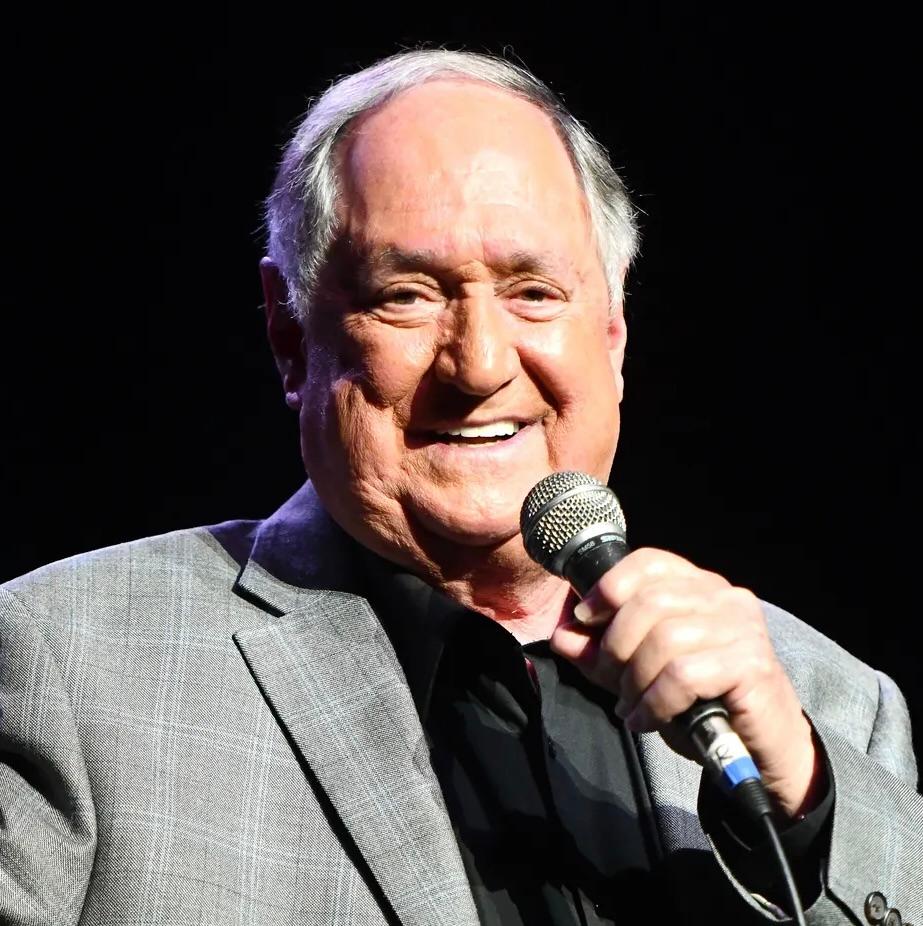
Neil
Sedaka
Songwriter
and singer Neil
Sedaka, died
February 27 at age
86. He was a piano
prodigy as a child and
later attended the
Julliard School of Music
— before discovering
rock & roll and
becoming one of rock and
pop music’s
pioneers.
At
the age of 13, he met
and befriended Howard
Greenfield. They became
a team and began a
regimen of writing a
song a day, a routine
they continued for
nearly two years. At the
same time, they began
making the rounds
together in Broadway's
legendary Brill
Building.
They
enjoyed their first
major hit in 1958, when
Connie Francis recorded
their song, "Stupid
Cupid." In
1959, Sedaka signed with
RCA as a singer. His
fourth single, “Oh,
Carol!” a lament to his
former girlfriend Carole
King, established Sedaka
as a
performer.
Other
hits included "Happy
Birthday, Sweet
Sixteen," "Calendar
Girl" and "Breaking Up
Is Hard to
Do." Sedaka had
three No. 1 hits, and
nine Top 10 hits. He
wrote songs and
collaborated with Frank
Sinatra, Elvis Presley,
Tom Jones, Elton John,
Clay Aiken, The
Fifth Dimension, Sheryl
Crow, Cher, Abba, Andy
Williams and the
Monkees.
Between
1959 and 1963 he sold 40
million records, making
him the second-highest
selling recording artist
after Elvis. But with
the arrival of the
Beatles, the music
business changed — and
Sedaka’s popularity
faded.
He
experienced a career
resurgence in the '70s
with No. 1 songs like
"Laughter in the Rain"
and "Bad Blood." He also
penned hit songs for
other artists, including
"Love Will Keep Us
Together" (Captain &
Tennille) and
"Solitaire" (the
Carpenters).
Sedaka
released over two dozen
studio albums and wrote
over 500 songs across
his career. He was
inducted into the
Songwriters Hall of Fame
in 1983 and was
nominated for five
Grammys — but
strangely, is not in the
Rock & Roll Hall of
Fame.
|
|
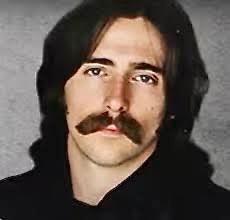
Dash
Crofts
Musician
and songwriter Dash
Crofts, who teamed with
Jim Seals to form
Seals and Crofts, died
March 25 at the age of
85.
Seals
and Crofts arrived at a
moment when pop music
was reaching for
something quieter and
more introspective. The
duo was at the vanguard
of the emerging soft
rock genre in the early
1970s, with hits like
"Summer Breeze" and
"Diamond
Girl."
While
in high school, Crofts
was playing drums in a
local band when he met
Seals, who was playing
saxophone in a different
band. Crofts joined the
band alongside Seals,
and a decades-long
musical partnership
began. Their career got
a boost when they joined
the Champs, who had
recently had an
instrumental hit with
"Tequila” in 1958. They
played and recorded with
the Champs for several
years, though Crofts
took two years off to
serve in the U.S. Army
in 1962.
When
the Champs disbanded in
the mid-'60s, Crofts
worked for a while as a
session musician. But
both he and Seals loved
to sing — but couldn’t
with the instrumental
Champs or as session
players. They eventually
decided to form their
own duo in 1969 and
released their debut
album that same
year.
But
it wasn't until the
release of their fourth
album,
1972's Summer
Breeze,
that they truly made
their mark. The title
track rose to No. 6 and
remains among the best
summertime songs.
(Crofts' mandolin helped
give the song its
signature sound.)
Their
next album,
1973's Diamond
Girl, also
scored a No. 6 hit with
its title track, while
another track, "We May
Never Pass This Way
(Again)," went to No. 2
on the Adult
Contemporary
chart.
Crofts
called the songs he
wrote with Seals "these
little, pleasant soft
songs, like wandering
troubadour kind of
music." Among the
influences on Seals and
Crofts was the Bahá'í
Faith that the two
shared.
|
|
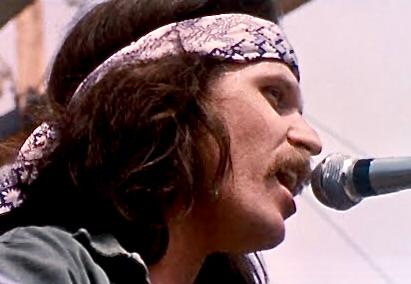
Country
Joe McDonald
While
releasing dozens of
albums, Joe McDonald,
who died March 7 at age
84, is best remembered
for just one song:
“I-Feel-Like-I’m-Fixin’-to-Die
Rag.”
McDonald’s
band, Country Joe and
the Fish, reflected the
political turmoil of
late 1960s America, as
the country grappled
with the Vietnam
war, race riots and
assassinations.
Initially
the Fish were an
acoustic folk group, but
within a few months they
had evolved into an
electric rock band. At
UC Berkeley McDonald
immersed himself in the
Bay Area’s burgeoning
early-60s folk music and
political protest
scene.
They
released their debut
album, Electric
Music for the Mind and
Body,
in 1967. A single from
the album, “Not So
Sweet Martha Lorraine,”
gave the group their
sole entry on the
Billboard singles chart,
reaching 98.
“I’m-Fixin’-to-Die
Rag” appeared on their
second album in 1967 and
gained universal
exposure and lasting
renown when McDonald
performed it solo with
just an acoustic
guitar, at
Woodstock in 1969.
The song’s stinging
black humor struck a
chord with the massive
crowd — and became one
of the best remembered
highlights of the
subsequent Woodstock
movie.
McDonald's
introduction to playing
music came via a
Hawaiian guitar owned by
his father, and he began
writing songs in his
teens. Both parents were
Communist party members
and named their son
after Joseph Stalin,
whose nickname was
“Country Joe.”
At
17 he enlisted in the US
Navy, and was stationed
in Japan for three
years. The experience
prompted him to feel
some sympathy for the
military, and he would
stress that
“Fixin’-to-Die Rag“
blamed the politicians
and the manufacturers of
weapons, not the
soldiers.
In
1969 McDonald launched
his solo career by
releasing the
album Thinking
of Woody
Guthrie,
a collection of Guthrie
covers. Fish dissolved
in 1970 but McDonald
continued recording and
performing as a solo
artist over the next
several decades, and was
a dedicated supporter of
Vietnam veterans.
|
|
|
|
|
Thanks
to our loyal
supporters!
|
|
|
Fred
Spanuello was near
perfect again. He
gave lots of good info
on Don Gibson for #5
which I worded
incorrectly, and
couldn't really be
answered. Below, I give
the answers to the
question I
intended. Thanks
for the answers
Fred.
Answers
to January 2026
Quiz:
Q1. During
the British invasion,
British groups looked
for Brill building songs
they liked, that never
became a big
hit. Manfred
Mann found "Do Wah
Diddy", and the
Searchers found "Needles
and
Pins". Who
sang the earlier non-hit
versions of these
songs?
A1. "Needles
and Pins" was released
by Jackie DeShannon in
1963; by the Searchers
in 1964. "Do Wah
Diddy" was released by
Manfred Mann in 1964; by
the Exciters in
1963.
Q2. Who
wrote "I'm Into
Something
Good"? Who
sang the first release
and when?
A2. Gerry
Goffin & Carole King
wrote the song. It
was released in June
1964 by Earl Jean
(McCree) of the Cookies
peaking at
#42; Herman's
Hermits release was in
Sept 1964 and peaked at
#13.
Q3. NAME
THAT TUNE! - What song
begins with the words
"Sleep my child let
peace attend"?
A3. "All
Through the Night" is a
traditional Welsh song
sung by many artists
over the years,
and
is in our
songbook.
Q4. NAME
THAT TUNE! – What song
begins with the words
"I'm Gonna Raise a
Fuss"?
A4. "Summertime
Blues" written by Eddie
Cochran & Jerry
Capehart went to #1
BB100 by Eddie Cochran
in 1959. The
most notable covers are;
Blue Cheer 1967 #14
BB100; the
Who 1970 #27 BB100; Alan
Jackson 1994 #1
BBCW.
Q5. What
Don Gibson's 1st BBCW
release. Which
of his other #1 BBCW
songs was recorded
before this.
A5. "Oh
Lonesome Me" was Don
Gibson's 1st Billboard
Country Western #1 song
and was recorded in Dec
1957. "Blue
Blue Day," which also
went to #1 later, was
recorded in June,
1957. "Sweet
Dreams" was also written
prior, but did not reach
#1 for Don.
Q6. What
future WLS DJ was part
of the Clear Lake, Iowa
Buddy Holly show?
A6. Bob
Hale joined WLS radio in
1960. At the time, he
was a Mason City, Iowa
DJ that emcee'd the
last show before
"The
Day the Music
Died." He
also did the coin flip
between Richie Valens
and band member Allsup
to determine who would
fly to their next
show.
Q7. Who
was Mary O'Brien, and
what was her first big
US hit, and her first
big solo US hit?
A7. Dusty
Springfield (born Mary
O'Brien) had a nice hit
with the Springfields in
"Silver Threads and
Golden Needles" in the
US in
1962. In 1963
she had a solo US hit
with "I Only Want to be
With You".
|
|
TRIVIA
SNIPPET:
Nino
Tempo & April
Stevens.
"Deep
Purple" became a #1
BB100 hit for Nino Tempo
& April Stevens in
Sep. 1963, but it took
awhile. Born in the
1930's, Nino & April
had separate
careers. In the
1950s April was a
breathy chanteuse, while
Nino was a jazz
saxophonist and session
man, and a small-part
actor.
In
the early 1960s, they
recorded a duet for
United Artists which
caught the producer's
attention. Their
first ATCO single made
the BB100
(#77). With 15
minutes left of studio
time in that session,
they recorded "Deep
Purple." The
producer shelved the
song, not liking it,
then twice
more. Nino's
friend, Phil Spector,
told the producer he
thought it was a hit and
should be
released. It was
released as the B-side
of yet another
song. DJ's played
the B-side, and it was a
hit.
|
|
|
NEW!
April 2026 Trivia
Quiz:
Q1. What
early 60's song includes
a line about a
pent-house, a brand new
car, and a mohair
suit?
Q2. What
was Motown's first #1
Hit, and what did Marvin
Gaye have to do with
it?
|
|
TRIVIA
SNIPPET:
The
Chiffons, Ronnie
Mack,
Jimmy
Mack & more.
The
Chiffons were high
school friends who began
singing in their Bronx
neighborhood, and
sometimes in the school
cafeteria.
Songwriter
Ronnie Mack wrote "He's
So Fine," and had them,
plus one more singer, to
do the demo. After
shopping the song
around, Laurie Records
released the demo which
went to #1 for 4 weeks.
While
at #1, Ronnie died at
the age of 23 from
cancer, and never saw
the gold record. In
1976, George Harrison
was found guilty of
"subconscious
plagiarism" and ordered
to pay $1.6 million.
This was later reduced
to $587,000, the amount
paid to Bright Tunes
(owner of “He's So
Fine”), new owner and
plaintiff.
It
is said that Ronnie
wrote "Puppy Love" at
~age 17 and sold it for
$25, and that he may
have written many other
hits which never got him
listed as the
writer. In
1966, Lamont Dozier
wrote the song "Jimmy
Mack," a hit for Martha
& Vandallas, in
remembrance of
Ronnie.
|
|
Q3. NAME
THAT TUNE! – What song
begins with the words
"When the Sun Goes Down
in the California
town".
Q4. NAME
THAT TUNE! – What song
begins with the words
"How Many Roads Must a
Man Walk Down"?
|
|
Q5. Name
3 things that Joanie
Sommers is known
for. 1=easy;
2= hard; 3=very
hard.
|
|
TRIVIA
SNIPPET:
"I
Can't
Sing!"
.
. . those were Tab
Hunter's words when he
was asked, and even when
he wasn't. In 1957
Dot records president,
Randy Wood, while in
Chicago visiting his
friend, DJ Howard
Miller, was told by
Howard that a young
heart-throb actor Tab
Hunter (born Arthur
Kelm) had ten thousand
kids lined up to see
him, and that Randy
should record
him.
Tab
kept saying he couldn't
sing. Randy heard
Sonny James "Young Love"
(already a
hit), called
an arranger (named Milt)
to get the song ready
for Tab, and teach Tab
how to sing
it.
Milt
came back saying "Tab
can't sing." A few
days later, they
recorded a
well-practiced "Young
Love," and an
unpracticed "Red Sails
In the Sunset" for the
flip side. Within 2
weeks of release, it
sold a million copies
and went to #1 on
BB100.
Warner
Brothers, who held Tab's
acting contract, was
flabbergasted. After
2 more lesser Tab hits,
WB threatened a
lawsuit. Tab's
success was what started
Sal Mineo and many other
studio pretty-men to
start recording.
|
|
Q6. What
Everly Brothers hit did
they not want to do, and
never performed
live?
Q7. What
were the Vogues first
two hits?
Q8. What
was the first Beatles
song played in the US,
when, where, and how did
it chart locally?
|
|
Everyone
is invited to respond
with answers. Send
them to AndyM
@
pictq@yahoo.com
|
|
|
A
Special
Thanks
to our
Membership
Contributors!!
Sustaining
Members
-
Anonymous
-
Dan
Anderson
-
Tom
Henry
&
Marian
Indoranto
- Rich
Pawela
-
Carol
&
Fred
Spanuello
-
John
Wolaver
Supporting
Members
($50 -
$199)
-
Betsy
&
Dave
Anderson
-
Christine
Buik
-
Frank
&
Helene
Clarke
-
Bob
Cordova
-
Lora
Ilhardt
-
Tony
&
Ann
Janacek
-
Dottie
&
Gerry
Lee
-
Bill
&
Connie
Lemos
-
Andrew
Malkewicz
-
Chuck
&
Susan
Maltese
-
Bill
&
Sandhya
Matthews
-
George
Mattson
-
Marianne
Mohrhusen
&
Mark
Dvorak
-
Gregg
&
Betty
Ann
Morton
-
Bud
&
Mary
Jane
O'Connor
-
Bob
&
Mimi
O'Hanlon
- Gary
&
Janice
Rotramel
-
Joe
&
Pam
Schumacher
-
Jennifer
&
Jim
Shilt
-
Dale
&
Evelyn
Stallmann
-
Tobias
Music
If
you
would
like to
become a
member
or just
need to
renew,
here is
a link
to
the renewal
form
you can
print
and
mail.
|
|
|
|
Bob
O'Hanlon
-
President
reohanlon@gmail.com
(630)
702-0150
Bill
Lemos -
VP,
Secretary
lemos.bill@comcast.net
2026
Board
Members
-
Bethany
DeHaan
-
Treasurer
-
Dottie
Lee
-
Technical
Support
-
Kristen
Fuller
-
Membership
-
Jennifer
Shilt
-
Jim
Gilroy
-
Dave
Humphreys
|
|
Bill
Lemos -
Editor
Dottie
Lee -
Tech
&
Distribution
Bob
O'Hanlon
Andy
Malkewicz
|
|
|
|
|
|
.gif)



.jpeg)
.jpeg)